
Massage Balls & Precision Recovery Accessories
When a foam roller is too broad, massage balls deliver the pinpoint accuracy needed for deep muscle work. Our selection includes a range of sizes and densities — from the peanut massage ball to firm single spheres — built for trigger point release across the spine, feet, shoulders, and glutes.
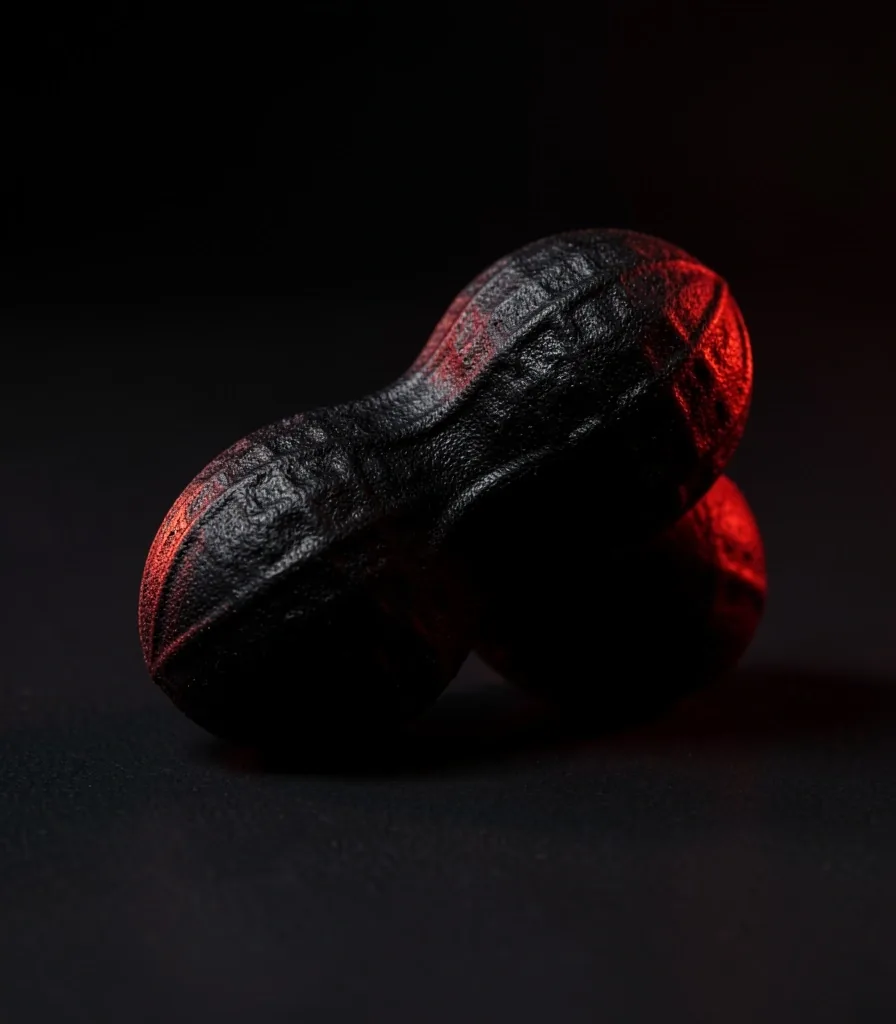
Dual-Ball Design
Cradles the spine safely
Material
High-density silicone
Grip
Skin & clothing safe
Portability
Bag & pocket ready
Use Case
Trigger point release
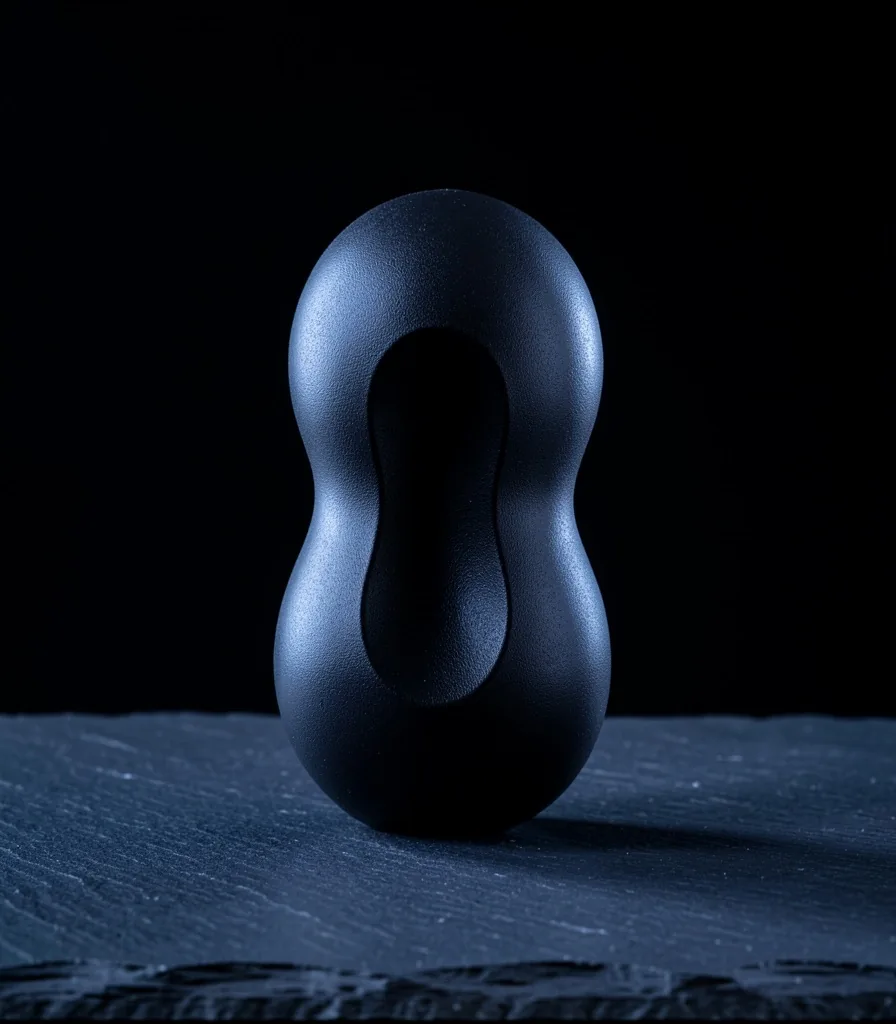
RestoreGear · Dual-Ball Series
01 — Benefits
The Peanut Massage Ball
The peanut massage ball is uniquely shaped to cradle the spine, allowing you to roll the muscles on either side of the vertebral column without placing direct pressure on the bones themselves. This makes it an ideal tool for addressing a stiff back or improving thoracic mobility — areas where a standard round ball would press awkwardly against bone.
Its dual-ball design provides a stable base that will not roll away mid-session, allowing for deeper and more controlled pressure during your recovery sessions. For anyone working on back stretching or seeking lower back relief tools that fit into a daily routine, the peanut shape offers a practical, repeatable entry point — especially useful for stretching for beginners who need a tool that stays put.
Spine-safe channel
The central gap keeps pressure off vertebrae while targeting paraspinal muscles.
Stable base
Two contact points prevent the ball from shooting out from under you.
02 — Precision
Precision Muscle Recovery
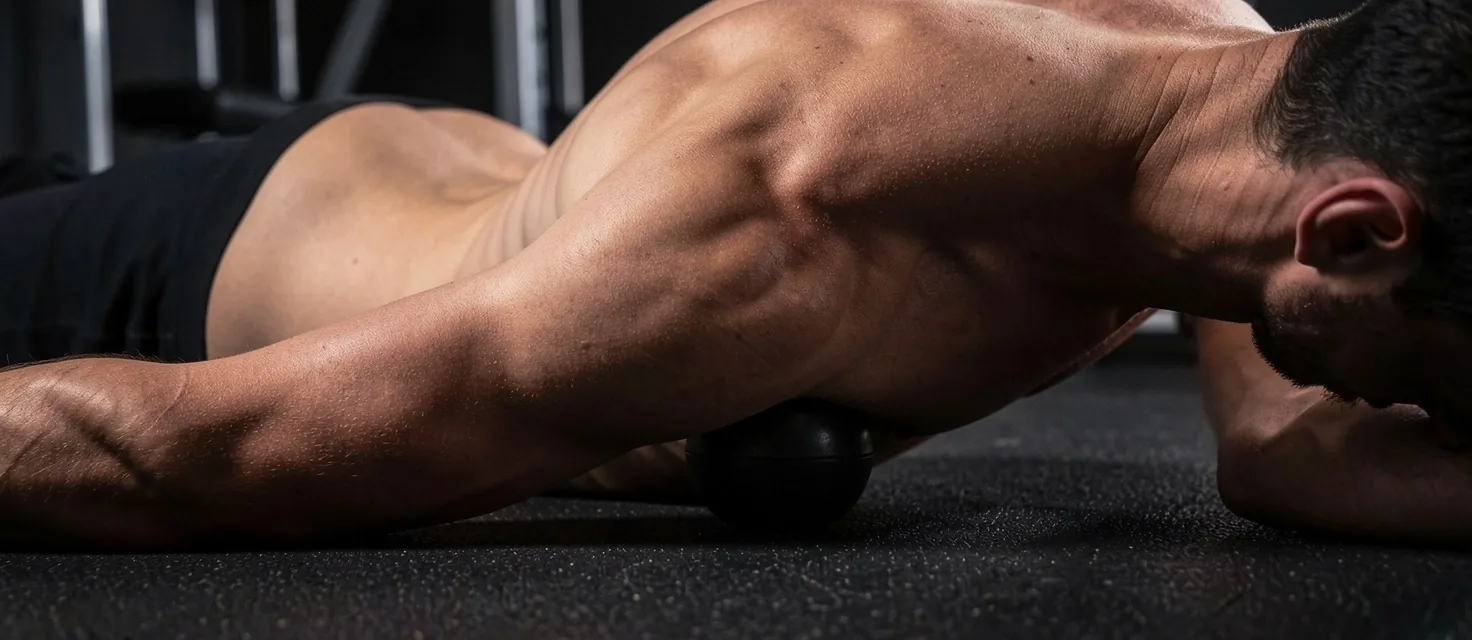
Standard massage balls are the ultimate tool for localized muscle recovery. By placing the ball against a wall or the floor, you can apply significant force to a very small area — something a broad roller simply cannot match. This is particularly effective for the subscapularis and other small muscles around the shoulder blade that are often responsible for tension headaches and restricted arm movement.
Our balls are made from high-grip rubber to prevent slipping during use, so the tool stays anchored while you adjust your body weight and angle. For anyone learning how to release muscle knots, the ability to hold sustained, controlled pressure on a single point is what separates a focused session from a general roll-out.
03 — Feet & Calves
Relieve Muscle Tension in Feet and Calves
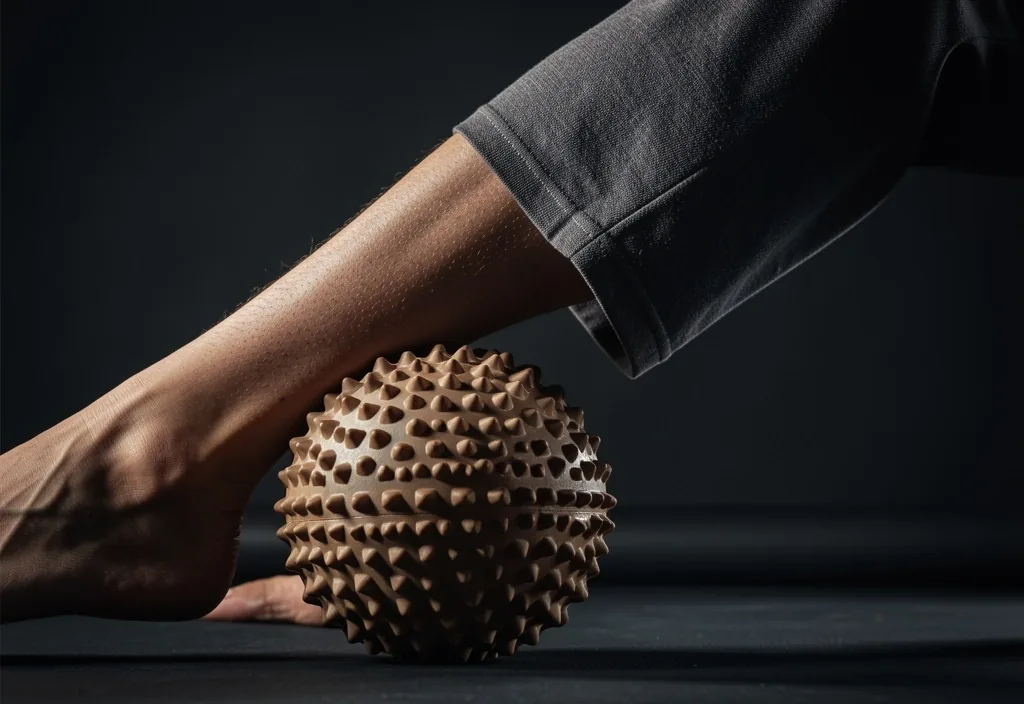
Foot health is often overlooked, yet it affects your entire kinetic chain — from ankle alignment to knee tracking to hip stability. Using a firm massage ball to roll the plantar fascia can help relieve muscle tension that builds up from running, standing for long shifts, or wearing restrictive footwear.
For the calves, a small ball can get deeper into the soleus muscle than a large roller, helping to maintain ankle mobility and preventing calf tightness from affecting your gait. This makes massage balls valuable joint mobility equipment for anyone who runs, lifts, or spends extended time on their feet — including mobility tools for seniors looking for gentle, controllable pressure.
04 — Portability
Portable Recovery Solutions
One of the primary advantages of massage balls is their portability. They fit easily into any bag, making them the perfect companion for office workers or frequent travelers who cannot carry a full foam roller everywhere they go.
Spending five minutes using a ball against your chair back can help manage the tension that accumulates during long periods of sitting, keeping your thoracic spine and hip flexors from seizing up between training sessions. For anyone building a post workout recovery kit that travels, a pair of massage balls is the most space-efficient starting point — and pairs naturally with resistance bands or fitness bands for a complete on-the-go routine.
Five-minute desk routine
Place a ball between your back and the chair, lean into a trigger point, and hold for 30–60 seconds per spot. Rotate through three or four points along the shoulder blade and upper back.
05 — Texture & Accuracy
Textures, Diameters & Trigger Point Accuracy
Choosing the right massage ball comes down to surface texture, diameter, and the area you are working on. A smaller ball delivers higher pressure intensity on a single point; a larger ball spreads that force across broader tissue. Here is how the options compare.
Smooth Balls
Allow for direct, deep-pressure work on a single trigger point. Best for sustained holds on stubborn knots in the glutes, shoulders, and feet.
Spiked Balls
Provide a more sensory experience and can help increase blood flow to the skin's surface. Useful for lighter recovery days or waking up tissue before deeper work.
Small Diameter
Concentrates force into a smaller contact area for higher pressure intensity. Ideal for the arches of the feet, the subscapularis, and deep gluteal muscles.
Large Diameter
Distributes pressure across broader areas like the quads, hamstrings, and upper back. A better starting point for those new to foam rolling exercises.
Trigger Points
Specific areas of muscle hyper-irritability that can cause referred discomfort elsewhere. Applying sustained pressure can lead to a noticeable release of tension.
Tiered Routine
Start with a foam roller to warm up tissue, then move to balls for detailed work on problem areas — covering large superficial layers down to deeper knots.
06 — Materials & Method
Quality Materials for Better Grip
The effectiveness of a massage ball depends on its ability to stay in place while you move your body over it. A ball that slides or shoots out from under you breaks your focus and limits how much pressure you can safely apply. Our balls are manufactured from high-density silicone and specialized rubber compounds that provide excellent grip on both skin and clothing.
This grip matters most when you are working against a wall or lying on the floor with your full body weight on the ball. A non-slip surface lets you hold a single point for 30 to 90 seconds — the kind of sustained pressure that produces a meaningful release — without the tool migrating across the muscle.
Combining Balls and Rollers
A comprehensive recovery routine often involves both broad and specific tools. We recommend starting with a foam roller to warm up the tissue and increase surface blood flow, then moving to massage balls for detailed work on problem areas. This tiered approach ensures that you cover all aspects of myofascial release — from the large superficial layers down to the deeper, more localized knots that rollers cannot reach.
Browse foam rollers & MFR tools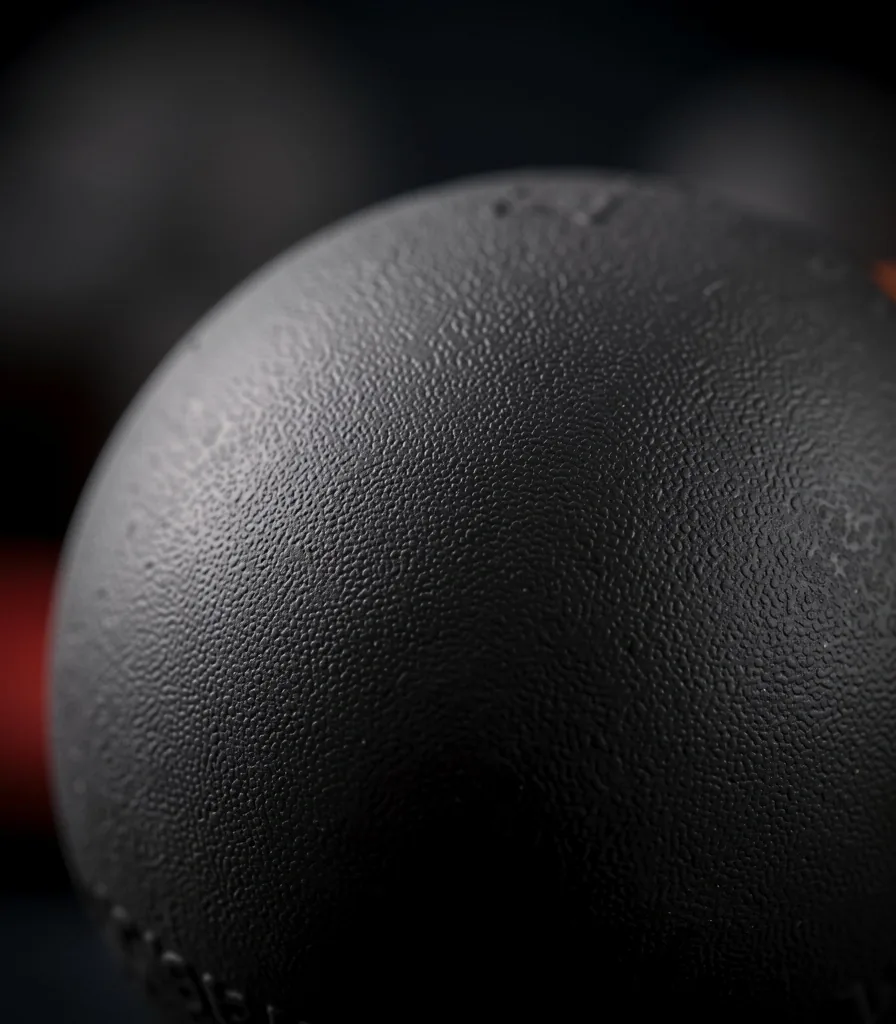
Surface · High-density silicone
07 — How We Evaluate
What We Look For in a Massage Ball
Every product we stock is assessed against the same practical criteria. We focus on how the tool performs in a real recovery session — not marketing claims.
Density & Firmness
A ball must hold its shape under full body weight without collapsing. Too soft and it bottoms out; too hard and it is unusable on sensitive areas. We look for a mid-to-high density that gives with controlled pressure.
Grip on Skin & Fabric
The surface material must resist sliding on bare skin, athletic clothing, and floor surfaces alike. This is the single biggest factor in safe, controlled pressure application.
Size Range
Different body areas need different diameters. We look for ranges that cover everything from small foot balls to larger quad balls, plus the peanut shape for spinal work.
Durability Over Repeated Use
Massage balls take repeated compression, body weight, and friction. We assess whether the material maintains its density and surface texture after weeks of regular use.
Build Your Precision Recovery Kit
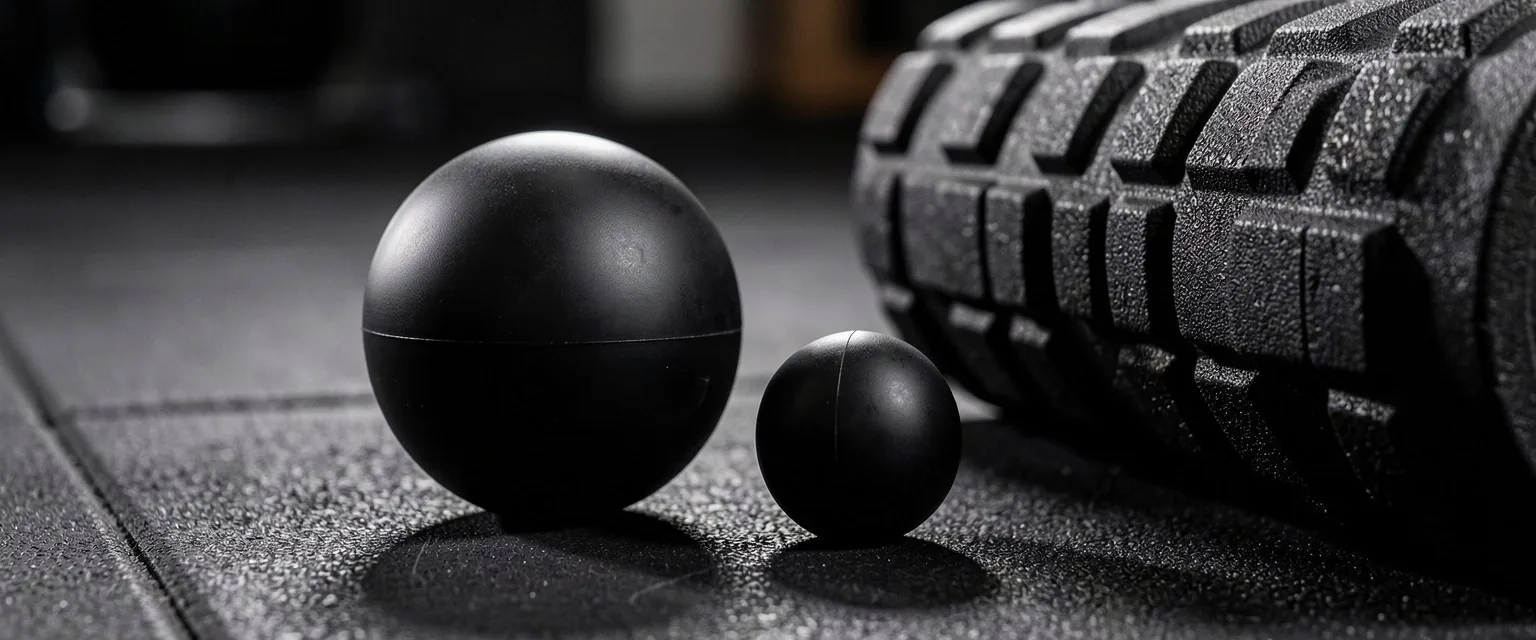
Browse the full range of massage balls, peanut rollers, and accessories — and pair them with a foam roller or stretching equipment for a complete post-workout recovery setup. If you are unsure where to start, our recovery kit guide walks through the essentials.